Grow Better Potted Plants Embroidery
A Quiet, Confident Statement for Thoughtful Makes
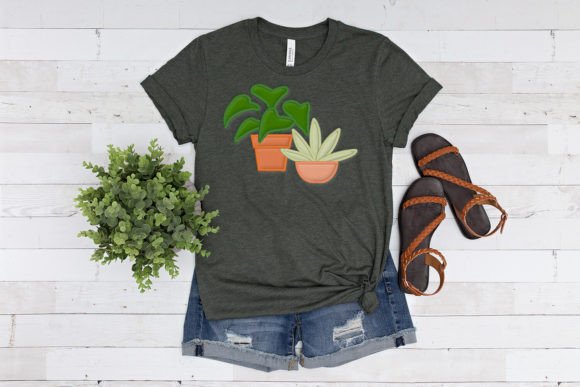
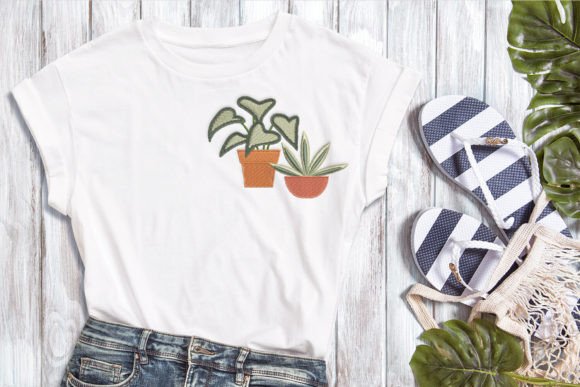
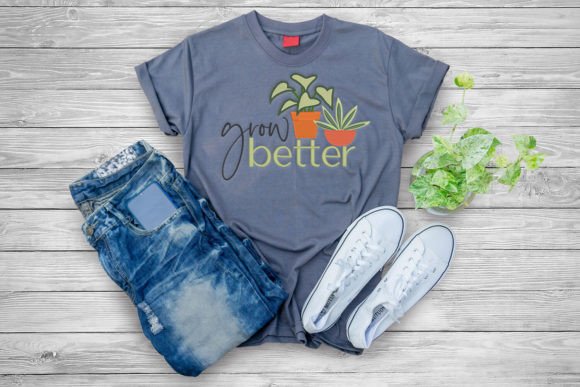
First impression? This isn’t a shout—it’s a soft, grounded smile. Grow Better Potted Plants Embroidery lands with calm intention: two modest potted plants flanking a clean, lowercase “grow better” phrase. No florid vines, no exaggerated leaves—just balanced, approachable botanicals and gentle typography. It reads as intentional, not decorative. That matters when you’re stitching for real people who’ll hold, wear, or gift the finished product.
Where It Lives Best (and Why)
I tested this on a natural linen tote bag for a local plant shop’s summer launch—and it worked beautifully. The design’s moderate width (no sprawling stems or oversized pots) fits cleanly within standard 4×4 hoops without awkward cropping. On that tote, the plants read as friendly companions, not botanical specimens. Customers paused to touch the stitch texture, then smiled at the phrase—not because it’s clever, but because it feels quietly sincere.
It shines on sweatshirt cuffs, baby onesies (especially in light sage or oat thread), and tea towels where subtlety reads as care. As an embroidered patch on a denim apron? Perfect. The shape is self-contained, so it doesn’t fight fabric drape. For Etsy sellers listing handmade nursery decor or small-batch kitchen goods, this design supports your brand voice instead of overriding it. It’s not flashy—but that’s its strength in a crowded handmade market.
Real-World Stitching Notes You Can’t Skip
- Stitch density feels thoughtful, not heavy. I ran it on midweight cotton twill with medium tear-away stabilizer—no puckering, no skipped stitches. But on ultra-thin rayon challis? I added lightweight cut-away underneath. Don’t assume it auto-adjusts for delicate fabrics.
- The lettering is legible at 3.5" wide, but below 2.75", the “b” and “e” in “better” start compressing. If you’re planning baby caps or tiny pillow corners, test that smallest size first—especially on stretchy knits where letter distortion happens fast.
- Dark fabric demands attention. On charcoal sweatshirts, I swapped the default green thread for a muted olive + cream combo. The original palette looked muddy. Always preview your thread colors against the actual garment—not just your screen.
- No applique here—this is a full machine embroidery design, built with satin stitch for pot rims and smooth fill stitch for leaves. That means crisp edges, but also zero fabric layering. Great for quick turnaround, less forgiving if your hoop slips mid-stitch.
What It Adds (and Doesn’t Add) to Your Finished Product
This design elevates perceived value without screaming “premium.” A customer buying a custom-embroidered kitchen towel with Grow Better Potted Plants Embroidery doesn’t think “cute,” they think “someone paid attention.” That builds trust—especially for craft businesses selling on Etsy or at local markets. It signals intentionality, which translates directly to pricing confidence.
It won’t carry your whole brand alone (it’s not a logo), but it works powerfully as a supporting motif: on packaging tags, as a subtle repeat on napkin hems, or stitched inside the collar of a boutique sweatshirt. And unlike overly literal “plant mom” designs, it avoids trend fatigue. Five years from now, it’ll still feel fresh on a vintage-style pillow cover or holiday gift set.
Where to Proceed With Care
Avoid dense, highly textured fabrics like bouclé or thick terry cloth—the fine leaf outlines can blur. Curved surfaces like baseball caps need careful digitizing adjustments; the current file assumes flat application. Also, skip this for high-wear items like toddler knee patches unless you reinforce with wash-away topping and double-layer stabilizer. The stitch count isn’t extreme, but tight corners on the pot bases can snag over time without proper backing.
And yes—check licensing before listing digital embroidery files or reselling stitched-on products. The description says it’s for commercial use, but always verify scope: does it cover physical goods only? Digital resale? Sublimation mockups? When in doubt, email the seller before scaling your craft business around it.
Designer-to-Designer Practical Checklist
- Test on scrap fabric matching your final project’s weight and stretch.
- Run a black-and-white mockup to assess contrast and balance—color can mask weak spacing.
- Compare how it reads on light vs. dark backgrounds using your exact thread palette.
- Inspect small details at 200% zoom: are leaf tips sharp? Does “grow better” flow without crowding?
- Confirm hoop size compatibility—some sizes may require 5×7, especially if adding borders later.
- Use appropriate stabilizer: tear-away for stable wovens, cut-away for knits, and topping for napped fabrics.
- Remember: this is a Single Flowers-category embroidery design, but its quiet composition makes it more versatile than most in that group—don’t limit it to floral-only collections.
Final Thought: It’s Not Just a Design—It’s a Vibe You Can Stitch
As someone who’s stitched hundreds of designs for clients, gifts, and my own small shop line, Grow Better Potted Plants Embroidery stands out because it asks nothing of the viewer—and gives everything. It doesn’t need explanation. It doesn’t chase attention. It simply belongs: on a handmade apron, a baby blanket, a gift-wrapped seed packet, or the sleeve of a small-batch organic tee. That kind of quiet resonance is rare. Use it well—and watch how often people pause, point, and say, “I love that.”